

Most of us have sat in a room where arguments repeat, emotions escalate, and resolution seems impossible. We have seen workplace silences that last for weeks, family disputes that never find closure, or personal disagreements that leave us uneasy. These are not just random occurrences. They are patterns. And these patterns often hide beneath the surface, shaping our perceptions and reactions.
Systems thinking offers a different perspective for addressing conflicts that never seem to resolve. Instead of blaming individuals or searching for a single cause, systems thinking invites us to look at the bigger picture—how different parts interact, influence, and sustain the situations we find ourselves entangled in.
What is systems thinking in conflict?
Before we describe how systems thinking changes conflict, we need a clear definition. Systems thinking is an approach that views issues as part of a whole, rather than isolated pieces. When used in conflict, it helps us move beyond simple “he said, she said” stories and instead, focus on structures, roles, and relationships that create and sustain tensions.
Instead of seeing conflict as just a personal issue, we start to see how culture, hidden expectations, history, and external pressures all play a role. We realize that every conflict has layers, and each layer tells a story about the system it belongs to.
Look for patterns, not just people.
That sentence, in our experience, is where transformation begins.
Why typical conflict approaches stall
In many situations, traditional approaches center on immediate problems: arguments, resentments, unmet needs, or misunderstood intentions. We might call a meeting, deliver apologies, or restate our positions. Sometimes, this works. But for deeper, recurring issues, these steps often fail to create lasting peace.
- Emotions resurface after a short period.
- The same argument happens again, sometimes with new characters.
- The underlying discomfort never truly goes away.
That’s because we are treating symptoms, not systems.
How systems thinking reframes unresolved conflict
We have seen that systems thinking causes a big shift: it turns our focus from "who's at fault" to "what is this conflict a symptom of?" This question opens up investigative curiosity. Suddenly, we see connections between events, roles, and expectations we overlooked before.
Seeing the web, not just the strand
Imagine a family where one person is always the peacemaker, another always causes tension, and others stay silent. Rather than seeing this as individual character traits, systems thinking asks: what roles have developed here, and why?
We might notice:
- Historical wounds that shape expectations.
- Unspoken rules that dictate who “can” express anger.
- External pressures (like illness or financial stress) that amplify sensitivity.
- Cycles—like escalation and avoidance—that keep repeating.
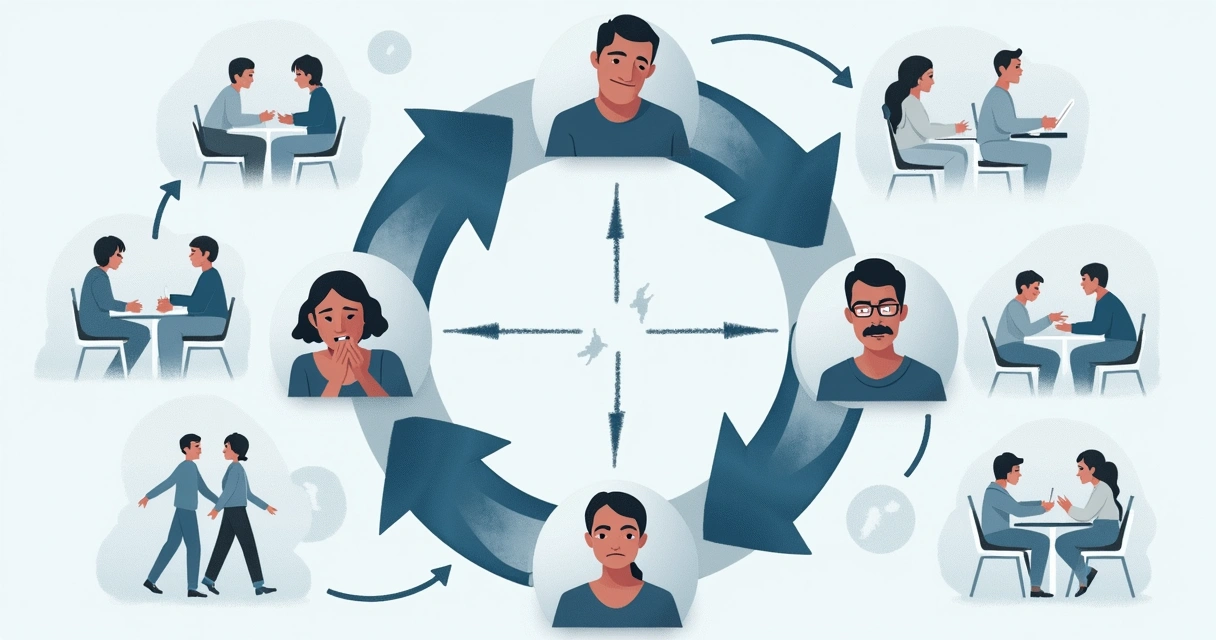
We now understand that changing a system means observing how each part affects and is affected by the others. With this, our strategy for resolution changes dramatically.
Moving from blame to responsibility
When we see conflict as a systemic issue, we avoid labeling people as “the problem.” We start asking different questions:
- What roles do people play in keeping this conflict alive?
- What hidden agreements or rules may exist?
- How do past events influence present behaviors?
- What patterns show up in similar situations elsewhere?
Patterns repeat themselves until the system is changed.
This way, we foster responsibility within the group, rather than blame on a person.
Tools and practices for systemic conflict resolution
In our experience, applying systems thinking to conflict involves several practical steps. These steps can be used in families, workplaces, or even within ourselves.
1. Mapping the system
We find that drawing a visual map of connections and influences helps reveal hidden themes. No need for complex charts—a simple diagram of roles, influences, and histories often uncovers new insights. For those who want to understand more about benefits, systems thinking for personal growth and behavior change offers further reading.
2. Identifying repeating patterns
Ask, “When has this happened before?” Look for similarities in situations, even across different people or times. This uncovers if the conflict is based on entrenched cycles, rather than unique disagreements.
3. Surfacing unspoken rules
Many conflicts persist because certain topics are off-limits or expressing emotion is discouraged. Naming these rules, together or individually, weakens their grip.
4. Expanding the circle
We often include people or parties who seem only indirectly involved. Sometimes, those on the sidelines hold valuable information or energy that can change the system. By expanding the conversation, we invite new perspectives and reduce polarization.

5. Agreeing on small system changes
Rather than declaring absolute solutions, experiment with changing one or two parts of the system. Examples include clarifying roles, setting new meeting agreements, or inviting reflection before discussions begin. Small changes can spark bigger transformations.
For practical steps, our guide on techniques to resolve conflict consciously can provide more strategies.
Benefits of applying systems thinking to conflict
Shifting perspective in this way often leads to outcomes that simple negotiation or mediation cannot deliver. Here’s what we have seen:
- People become less defensive, as the blame moves from individuals to patterns and structures.
- Long-standing issues finally change, because the whole system participates.
- Relationships strengthen through deeper understanding, not just compromise.
- The same problem does not keep coming back in different forms.
- Growth occurs, not just for individuals, but for the whole group, team, or family.
Systems thinking does not eliminate conflict, but it transforms how we live with and learn from it.
A change in the pattern is a change in the story.
Conclusion
Resolving conflict is rarely about finding one solution or fixing one person. When we practice systems thinking, we accept that conflict exists within a web of influences, histories, and mutual impacts. By addressing these larger forces, we find new possibilities for lasting peace and transformation—whether in our families, our teams, or within ourselves.
In short:
- Look for patterns, not just culprits.
- Map out roles, influences, and unspoken agreements.
- Invite participation from all parts of the system.
- Try small, systemic changes to break cycles.
With this approach, unresolved conflicts become opportunities for learning and true change—both for us and the systems we are part of.
Frequently asked questions
What is systems thinking in conflict?
Systems thinking in conflict means viewing disagreements as part of a larger system, including roles, rules, histories, and contexts. It is about understanding how patterns, not just people, keep conflicts going. This helps us address the roots, not just the symptoms.
How does systems thinking resolve conflict?
By showing connections between choices, events, and behaviors, systems thinking uncovers hidden causes of conflict. Making small adjustments in the system—like clarifying roles, changing group norms, or including more voices—can break long-standing cycles. It moves the focus from blaming individuals to empowering everyone to shape new outcomes.
Can systems thinking prevent future conflicts?
Yes, applying systems thinking helps identify issues early by revealing repeating patterns and unspoken rules. When a group understands how systems create conflict, they are better prepared to prevent similar situations from happening again. This builds a culture of awareness and proactive communication.
Is systems thinking worth learning for conflicts?
Definitely. Systems thinking not only helps resolve existing conflicts but also builds emotional maturity, teamwork, and resilience. Learning this approach creates stronger, more understanding relationships both at work and at home.
How can I start using systems thinking?
Start by noticing repeated patterns in your conflicts. Ask “what keeps this going?” and try mapping the roles and rules involved. Include more people in finding solutions and experiment with changing small things in how you interact. The more you practice, the more natural it becomes to see the bigger picture and act with awareness.