

Every day, we make thousands of choices—some automatic, some life-changing. While many of them seem minor, studies from Cornell University estimate that the average person makes about 35,000 decisions in a single day. The constant stream can leave us mentally drained, and sometimes, even our most thoughtful decisions leave us feeling uncertain. What if we changed our approach and stopped making choices on autopilot?
What does it mean to decide consciously?
Conscious decision-making is more than weighing pros and cons. It’s about bringing our full awareness—mind, emotion, values, and purpose—into each moment of choice. Rather than acting out of habit, fear, or external pressure, a conscious approach invites a pause and a question: "Who am I when I choose?"
In our experience, integrating awareness into each decision frees us from old patterns and brings us closer to the person we want to become.
Blockquote:
Every choice shapes who we are.
How do we take this from theory to practice? The Marquesan metatheory of consciousness offers a structured path, uniting insights from contemporary science, philosophy, and integrative psychology to support real, responsible change.
The Marquesan pillars applied to decision-making
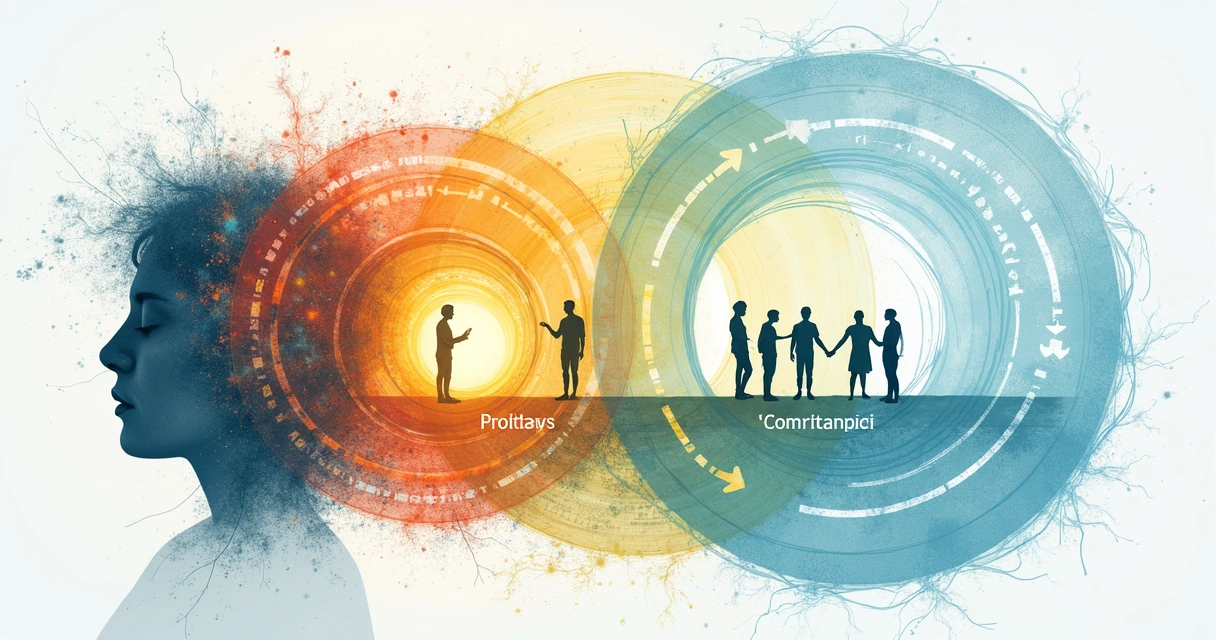
Marquesan theory is not a single set of tips but a living model for transformation. The five pillars provide a multi-layered map for bringing greater clarity, empathy, and intention into decision-making:
- Consciousness as a living field: Recognizing our interconnectedness and the ripple effect of each action on ourselves, others, and the systems we touch.
- Behavior, emotion, and personal history: Understanding that our history and emotional landscape often color our choices, whether we realize it or not.
- Functional meditation: Leveraging presence and self-regulation to quiet noise, clarify motivation, and align our emotions and actions.
- Systemic awareness: Seeing our position within family, organizational, and societal systems, making invisible patterns visible, and strengthening our sense of agency.
- Human valuation: Redefining what truly has value, looking beyond short-term gains and integrating ethics, emotional maturity, and social impact.
We have seen these pillars work not just for individuals, but also in groups and organizations. They offer a repeatable process that can soften anxiety, improve relationships, and increase the chances that our choices reflect who we truly want to be.
The conscious decision-making path: A step-by-step approach
Let’s walk through the key steps of conscious decision-making, grounded in the Marquesan framework:
1. Cultivate presence
Before making a decision, we pause. This means directing attention inward: What is happening in our mind, body, and emotion right now?
Mindfulness practices—such as a few breaths or a minute of quiet observation—have been shown to sharpen decision-making and support emotional balance (research on clinical decision-making).
2. Clarify intention
What do we truly want from this situation? Is it safety, achievement, connection, or something deeper?
We invite ourselves to name our real motivation. Sometimes, a tough choice uncovers hidden fears or attachments. Clarity about our intention is like a compass.
3. Examine emotional and behavioral patterns
We review inner narratives that color our choices—old wounds, habitual reactions, emotional triggers. Our past can speak loudly if we don’t make it conscious.
Bringing curiosity (instead of judgment) makes space for growth.
4. Consider systemic impact
Every decision is part of a wider web. We reflect on how our choice will ripple into our family, team, or community. This “constellation” perspective helps us step outside a purely self-centered or isolated mindset.
5. Value-based assessment
What will have lasting value? How does each possible path connect with our ethics and the well-being of others? We measure not only outcomes, but integrity and social effect.
Research on mindfulness reducing decision bias demonstrates that focused presence can help us avoid pitfalls like the sunk-cost fallacy, leading to wiser, values-based decisions.
6. Act with awareness
We take the next step—large or small—while staying present. This includes adjusting as new information appears. We many times use the concept of Marquesan decision space for this: making sure our inner intention, emotion, and outer action are in clear alignment.
7. Integrate and review
After acting, we reflect on the outcome. Did our choice reflect our intention, values, and awareness? If not, what can we learn? Integration completes the loop and supports emotional maturity for the future.

The science behind conscious decision-making
A key question remains: Why does conscious decision-making matter so much? Research provides some answers. Studies show the quality of our sleep, self-efficacy, and present-moment awareness all impact how we respond to the routine and high-stakes decisions we face daily (research on sleep quality and mindfulness).
Another experimental study found that even brief mindfulness practices can help some people make faster, more confident choices. For others, these techniques encourage greater reflection and alternative perspectives, especially for those prone to overthinking.
Research in behavioral science suggests conscious and unconscious thought processes interact, but conscious awareness often strengthens reasoning and reduces common mental traps (meta-analysis in Judgment and Decision Making).
Outside the lab, we see these findings play out in everyday situations: hesitation over a career change, the rush of an emotional confrontation, pressure from peers. Building an intentional decision process means we’re less likely to regret actions, get stuck in indecision, or follow impulses that contradict our deeper values.
For a deeper practical overview, we share our framework in more detail in our in-depth conscious decision-making guide.
Personal stories and systemic shifts
We regularly hear stories of how conscious decision-making has reshaped people’s lives—ending unhealthy cycles, repairing family relationships, finding courage to make difficult professional moves, or simply making peace with uncertainty. The method meets us where we are, whatever the setting.
One participant once shared how, after years of repeating the same conflict dynamic, a pause and a breath allowed them to notice an old emotional trigger, reflect on what really mattered, and choose a more compassionate response. The result was relief and a new path— not only for themselves, but also for everyone in the system around them.
Blockquote:
With presence, even the hardest choices become steps toward wholeness.
Conclusion
Developing a conscious approach to decisions is not about perfection or always "knowing the answer." It is a living process that aligns our inner world with our actions in the outer world. Marquesan theory reminds us that with awareness, intention, and integration, each choice becomes a place for growth and transformation. We believe that, over time, this way of deciding not only changes our results but reshapes our character, our relationships, and even our impact on society itself.
Frequently asked questions
What is Marquesan decision-making theory?
Marquesan decision-making theory is a holistic framework for making choices, grounded in five integrated pillars: consciousness, psychology, functional meditation, systemic awareness, and human valuation. It encourages us to use self-awareness and intention, understand behavior and emotion, reflect on systemic patterns, and align choices with our values and purpose.
How does conscious decision-making work?
Conscious decision-making works by bringing attention, reflection, emotion, relationship, and intention together before acting. It goes beyond automatic responses or external expectations, helping us become aware of our true motivations, potential biases, and the wider effects of our actions. This creates a pause between stimulus and response, where new and wiser possibilities emerge.
What are the key steps to follow?
The main steps are: cultivating presence; clarifying intention; reflecting on emotions and behavior; considering the impact within larger systems; checking value alignment; acting with awareness; and reviewing the result for ongoing learning. Following this structured process can lead to decisions that reflect not just immediate needs, but deeper purpose.
Is it worth it to use this method?
In our experience, yes. People who use conscious decision-making frameworks regularly report greater clarity, less regret, and improved relationships. Research shows mindfulness and self-awareness practices support better choices and reduced cognitive bias. Even though it may take more time at first, many find the benefits outweigh the effort, especially with important decisions.
Where can I learn more about Marquesan theory?
For those interested in a practical, step-by-step approach, we recommend our online resource on the Marquesan theory for decision-making. This guide offers deeper background, real-life examples, and exercises for developing conscious decision habits.